

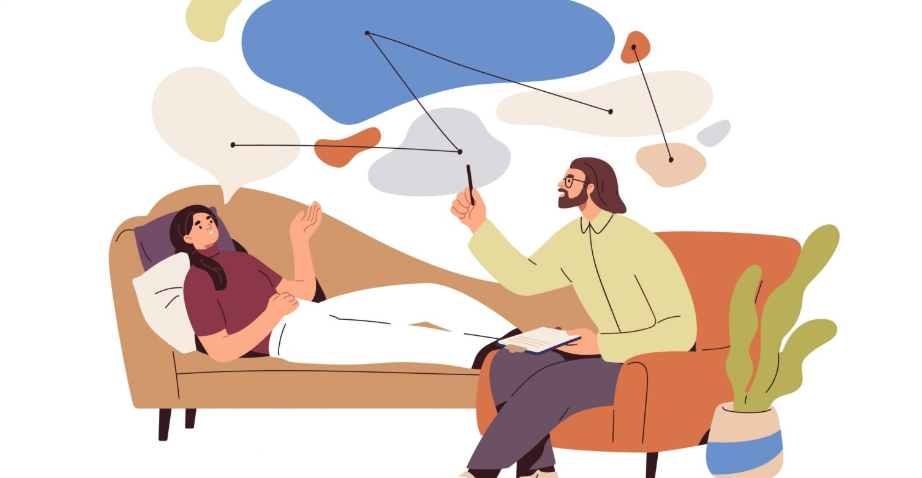
Dear Therapist: On Preparing the Inner Room
Whether through journaling, art, music, or prayer, find your medium.
Express so that you may receive.
Time spent feeling into yourself before a session is not indulgence — it’s preparation.
Before the door opens, before the client sits, it is worth pausing to notice:
How am I arriving?
Am I rested? Doubtful? Guarded? Awake?
Even the smallest questions — Have I had coffee yet? — are small doors into presence.
The doubt, too, is human. It does not need to be silenced. It needs acknowledgment.
To name our unease is to clear the room within ourselves, making space for another to enter.
Presence requires that we temporarily set aside the self — not to erase it, but to widen it.
Three minutes with a pen can do this.
Write what clouds the mind. Empty it onto paper. Let the page hold what you no longer need to carry into the hour ahead.
This small ritual has followed me through the years. When practiced, it restores something sacred: the stillness before contact.
In those brief minutes of writing, I find that my thoughts soften, my breath returns, and the room feels larger — as if the sky itself has been wiped clean.
This morning, my page held resentment, anger, sadness, paranoia.
Old feelings toward my father, my friends — the submerged currents that therapy, both given and received, continues to stir.
Opening a private practice brought new waves of insecurity; the subconscious, faithful as the tide, delivered its reminders through dreams.
In one dream, my parents pressed me to account for myself. I turned on my father:
“Why don’t you do this for your own feelings toward Mom?”
A classic projection, perhaps — or the psyche demanding symmetry.
In another, a boy my age wore a wire. I tore it away and silenced it, waking with relief.
Was he my shadow? My twin? Myself? The image remains unresolved, but the act of writing it brings shape to the blur.
That is the quiet power of reflection.
Even attention to something as small as the hum of a fly near the window can return us to the present.
We need not always plunge into the subconscious depths; even light observation can be cleansing.
To write as a therapist is a form of reading — of oneself.
It is an act of translation between the inner and the outer world, a bridge between knowing and feeling.
Whether through journaling, art, music, or prayer, find your medium.
Express so that you may receive.
So that when another sits across from you, they may find in your openness a place to rest, to speak, to see themselves reflected — clearly, and without judgment.
That is our work.
To tend the inner room, so the outer one may hold the world.

When Lost, Sit Still: Why Stillness Might Be the Most Courageous Movement You Make
When life feels directionless, stillness can feel like surrender—but it might actually be the most courageous movement you can make. Therapist Tyler Buckhout, LICSW, reflects on the paradox of wandering, stillness, and being human.
By Tyler Buckhout, LICSW
There’s an old maxim that’s been echoing through my work with clients lately—and in my own heart too:
When lost, sit still.
It’s a phrase that sounds deceptively simple. Ancient, even. But it holds a radical challenge for anyone living in a culture that worships motion, progress, and certainty.
I’ve reached a point in my life where the practical worries—paychecks, tolls, parking tickets—feel small, even mundane. These once-heavy anxieties now serve as quiet reminders of how far I’ve come. And yet, in their smallness, I find myself facing a bigger, stranger silence:
What now?
The hum of purpose, once sharp and motivating, has faded into the background—a soft static, like the fuzz on an old TV screen. And when it roars back, it’s overwhelming, like standing too close to an airplane as it lifts off.
I’m not alone in this. I see it in people across ages and lives: 19, 27, 31, 48. The seeker in all of us.
So what do we do when we find ourselves in the woods—metaphorical or otherwise—without a map?
Waiting in the Woods
The ancient advice says: wait.
But waiting assumes rescue. Embedded in that wisdom is the belief that someone—or something—will come find us.
For those of us who resist being rescued, who have spent our lives learning self-reliance, the lesson changes:
To sit still becomes not an act of passivity, but of courage.
How do we turn inward when we are lost?
What tools do we possess to face the darkness—our own fear, confusion, longing—without fleeing?
For those who define themselves through others—a partner, a twin, a family role, a trauma—the forest can feel unbearable. Both the darkness and the self feel like unreliable companions.
And yet, something sacred happens in therapy: two people sit together in that forest.
The healer and the healed, taking turns holding the lantern.
Each uncertain which one of them is leading.
That is the quiet miracle of presence.
Even in the dark, light is made.
We are all walking each other home, as the saying goes.
The Wanderer Archetype
I’ve been many things in my life—therapist, supervisor, farmer, soldier, bodybuilder, seeker, rebel, poet, pilgrim. Each role, in its own way, has been a myth—a story I’ve lived into.
Perhaps this is where religion and philosophy both begin: with the wanderer.
Jesus from the desert. Odin, cloaked and windblown.
Each begins alone, searching.
The wanderer embodies mystery. Both becoming and being. Unknown and known.
Years ago, I walked the Camino de Santiago. My pilgrimage wasn’t religious in the traditional sense but in an older, human one—the instinct to move, to walk simply because walking feels like remembering something ancient.
We are the only species, as far as we know, that questions its own existence.
We tell stories not just to survive, but to understand.
And maybe that’s the point: the wandering is the understanding.
Stillness as Movement
When lost, sitting still doesn’t mean stopping.
It means shifting the kind of movement we make.
Stillness can be its own pilgrimage—an inward step rather than an outward one.
Because when we move without awareness, we lose ourselves.
When we become too still, we stop existing.
Living means holding both truths at once: stillness and motion, wandering and resting, seeking and being found.
Maybe that’s what I’ve been trying to do all along with my writing and my work—to love existence enough to wrestle with it. To rebel by refusing to numb out.
Each sentence, each conversation, each act of noticing is a declaration:
I am here.
I am still walking.
Even when sitting still.
The Paradox of Being
To be human is to be in paradox—restless and rooted, becoming and being.
And when we stop running from that contradiction, we start to live inside it.
So when lost—sit.
But remember that sitting is still a form of walking.
The path continues beneath you, even if unseen.
And maybe, just maybe, that’s all we’ve ever needed to remember.
Tyler Buckhout, LICSW, is a psychotherapist and clinical supervisor based in Boston and the founder of Real Therapy, a group practice dedicated to helping individuals and clinicians rediscover meaning through authenticity, connection, and self-inquiry.
Post One - Dear Therapist…
Starting out on your own can be scary. Slow times feel as if they’ll last forever. And waiting for new clients is like watching paint dry. In fact, a better hobby would be watching paint dry…
Starting out on your own can be scary. Slow times feel as if they’ll last forever. And waiting for new clients is like watching paint dry. In fact, a better hobby would be watching paint dry.
You can’t force a client to walk through your door. And if you did, it’d be under less-than-ideal pretenses. Imagine, for a moment, that you had even three new individuals show up at your doorstep in one week. Three new sets of intake paperwork. Three new sets of names. Three new stories and histories to keep straight. Not impossible by any means, yet not really ideal either.
Time is your friend in most aspects of therapy. Rapport is build through slow and consistent trust. And so having a mirror put up in front of you to reflect on this process with your clients is clarifying. The quick and eager burn is far more dangerous than the slow one.
Momentarily, such feelings of insecurity may leave you doubtful and dejected. Go see your therapist about it… I say this in jest, but truly, these feelings are direction points toward the healing work that is done in all quiet spaces.
You may have the wound of abandonment. The voice that tells you that you aren’t good enough unless someone shows up for you right in front of you, telling you that it’s going to be okay. Can you offer yourself this solace?
You may have the wound of harm. The entity that tells you that you are in danger alone. Beckoning with steely knives and threats to cause pain unless that other is just around the corner. Can you remember that you are safe, here, now?
This journey of healing work is not for the faint of heart. I had an old mentor tell me often that “we did not get into this business for no good reason!” Meaning to say that each of us has “stuff” that we bring to the therapy table. Not all meals are delectable here. But all of them are out to be ingested.
You get to decide which piece of therapy pie to eat today. Is it the painful one? The comforting one? The patient one?